
Strainer spoon
Unknown Artist
18th century
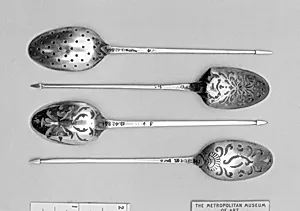
Medium
Silver
Dimensions
Length: 5 in. (12.7 cm)
Classification
Metalwork-Silver
Culture
British
Department
European Sculpture and Decorative Arts
Museum
Metropolitan Museum of Art, New York, NY
Credit
Rogers Fund, 1913
Accession Number
13.42.84j
Rights
Public Domain
Art Historical Context
This delicate 18th-century British strainer spoon, crafted from silver and measuring just 5 inches length, exemplifies the exquisite metalwork of the Georgian era. Housed in the Metropolitan Museum of Art's Department of European Sculpture and Decor Arts (acquired through the Rogers Fund in 3), it belongs to the classification of Metalwork-Silver, highlighting the technical prowess of anonymous British silversmiths who transformed everyday utensils into objects of refined beauty. Strainer spoons like this one were essential in affluent households for culinary tasks, such as skimming fat from broths, straining tea leaves, or serving sauces without solids. Silver's luster and durability made it a preferred medium for tableware, symbolizing wealth and status amid Britain's booming silver trade and colonial influences. The compact size suggests portability, perhaps for personal use at the table or in pocket-sized kits for travelers. Though the artist remains unknown, this piece reflects the era's emphasis on functional elegance—hallmarks punched into silver ensured quality and origin, fostering trust in a competitive market. A charming survivor of domestic life, it invites us to ponder the hands that once wielded it over candlelit dinners.