
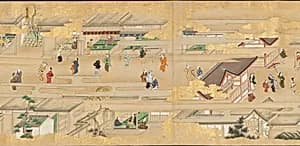
Street Scenes in Kyoto
Unknown Artist
17th century
Medium
Handscroll; ink and color on paper
Dimensions
Overall: 13 x 257 1/4 in. (33 x 653.4 cm)
Classification
Paintings
Culture & Period
Japan · Edo period (1615–1868)
Department
Asian Art
Museum
Metropolitan Museum of Art, New York, NY
Credit
Gift of Edward M. Bratter, 1957
Accession Number
57.70.5
Rights
Public Domain
Tags
Art Historical Context
"Street Scenes in Kyoto," captivating 17th-century handscroll Japan's Edo period (16151868), offers a vivid panoramic glimpse into the bustling urban life of the ancient capital. Crafted by an unknown artist using ink color on paper, this work measures an impressive 13 x 257¼ inches (33 x 653.4 cm), allowing it to unfurl like a living tapestry of everyday commerce and activity. Now housed in the Metropolitan Museum Art's Asian Art Department a gift from Edward M Bratter in 1957, it captures the energy of Kyoto's markets and streets, where vendors, shoppers, and passersby mingle amid traditional architecture. During the early Edo era, Japan enjoyed relative peace under the Tokugawa shogunate, fostering urban growth and a fascination with commoner life that foreshadowed later ukiyo-e prints. Kyoto, as the cultural heartland, was alive with festivals, trade, and artisanal crafts, and this scroll preserves that vibrancy through detailed vignettes of market stalls laden with goods, teahouses, and throngs of people in period attire. Such genre scenes highlight the period's shift toward depicting secular, relatable moments, blending realism with decorative flair. Handscrolls like this were designed for intimate, sequential viewing—unrolled section by section among friends or family—making the viewer's journey through Kyoto's streets an immersive narrative experience. The delicate interplay of ink washes and vibrant colors evokes the transient buzz of city life, inviting us to ponder the timeless rhythm of human endeavor in historic Japan.