
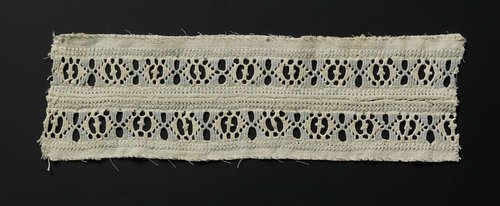
Strook linnen met blauw en wit kantborduurwerk met uitgetrokken draden
c. 1840 - c. 1860
Medium
strip
Dimensions
27; 8
Rights
Public Domain
About this artwork
length 27 cm x width 8 cm
Art Historical Context
This delicate linen strip, titled *Strook linnen metauw en wit kantbordwerk met uitgetrokkenaden* (Strip of Linen with Blue and White Embroidery and Drawn Threads), dates to around 1840–1860. Measuring just 27 cm long by 8 cm wide, it exemplifies anonymous artisanal needlework from the mid-th century, likely created in a Dutch or Flemish context given the title's language. Such narrow strips were prized as decorative borders for garments, linens, or textiles during the Victorian era, when fine handiwork symbolized domestic virtue and skill. The artwork showcases "drawn thread" embroidery, a meticulous technique where selected linen threads are carefully withdrawn to form openwork grids, then stabilized and adorned with blue and white lace-like stitching. This method, rooted in centuries-old European traditions, creates a lightweight, translucent effect that mimics expensive bobbin lace but uses accessible materials—perfect for home embroiderers. The restrained palette highlights the interplay of texture and negative space, blending functionality with subtle elegance. Though anonymous, pieces like this reflect the cultural importance of women's needle arts in the 19th century, often passed down as family heirlooms or samplers. They offer a window into everyday creativity, preserving techniques that bridged folk craft and fine art amid industrialization.
About the Artist
anonymous
In the vast tapestry of art history, "Anonymous" stands not as a singular individual but as a collective designation for countless unidentified creators whose works have endured across millennia. These artists, spanning prehistoric cave painters to medieval illuminators and folk craftsmen, produced the foundational layers of human visual culture. Prior to the Renaissance, when individual fame emer...