
Stucco Fragment
Unknown Artist
probably 8th–12th century
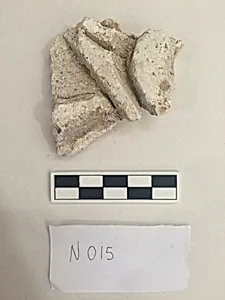
Medium
Stucco; carved, painted (?)
Dimensions
H. 1 15/16 in. (5 cm) W. 1 15/16 in. (5 cm) D. 13/16 in. (2 cm)
Classification
Stucco
Department
Islamic Art
Museum
Metropolitan Museum of Art, New York, NY
Credit
Rogers Fund, 1948
Accession Number
48.101.317
Rights
Public Domain
Art Historical Context
This delicate stucco fragment, dating to the 8th–12th century, a glimpse into the refined artistry of Islamic architecture during a golden age of cultural flourishing. Likely originating from a mosque, palace, or in the Islamic world—possibly regions like Iraq, Iran, or Central Asia—it exemplifies the era's passion for ornate decoration. Small in scale (just under 2 inches square), such fragments were once part of larger panels adorning walls, arches, or prayer niches (mihrabs), where they contributed to immersive spiritual environments. Crafted from stucco—a versatile plaster-like material molded and carved while wet—then possibly painted for added vibrancy, this piece highlights masterful techniques. Artisans achieved intricate patterns through incising and low-relief carving, often featuring geometric motifs, arabesques, or vegetal designs that symbolized paradise gardens in Islamic tradition. Stucco's affordability and workability made it ideal for spreading opulent aesthetics across diverse regions, bridging Byzantine, Persian, and local influences. Acquired through the Rogers Fund in 1948, this fragment now resides in The Metropolitan Museum of Art's Islamic Art Department. Though worn by time, it whispers of the ingenuity that defined medieval Islamic craftsmanship, inviting us to imagine the grandeur of its original setting.