
Stucco Fragment
Unknown Artist
probably 8th–12th century
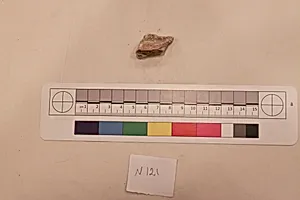
Medium
Stucco; carved (?), painted
Dimensions
H. 9/16 in. (1.5 cm) W. 9/16 in. (1.5 cm) D. 13/16 in. (2 cm)
Classification
Stucco
Department
Islamic Art
Museum
Metropolitan Museum of Art, New York, NY
Credit
Rogers Fund, 1948
Accession Number
48.101.423
Rights
Public Domain
Art Historical Context
This delicate stucco fragment, dating to the 8th–12th century, offers a glimpse into the refined architectural artistry of the Islamic world. Measuring just 9/16 inch high, wide, and 13/16 inch deep, it is a tiny survivor from what was likely a larger decorative ensemble in a mosque, palace, orrasa. Acquired through the Rogers Fund in 8, it now resides in the Metropolitan Museum Art's Department of Islamic Art, exemplifying the medium's prevalence during the Abbasid and Fatimid eras. Stucco, molded plaster-like material, was prized in Islamic architecture for its versatility in creating intricate carvings and low-relief sculptures. Here, the surface appears carved—possibly with geometric or vegetal motifs common to the period—and traces of paint suggest vibrant polychrome finishes that once enlivened interiors. These techniques allowed artisans to mimic costly stone carving affordably, adorning mihrabs, arches, and friezes while adhering to aniconic traditions that favored abstract patterns over human figures. Though its precise provenance remains unknown, this fragment underscores the cultural flourishing of Islamic decorative arts, where craftsmanship blended Persian, Byzantine, and local influences. It invites visitors to appreciate the ephemeral beauty of architecture's smallest details, preserved across centuries.