
Stucco Fragment
Unknown Artist
probably 8th–12th century
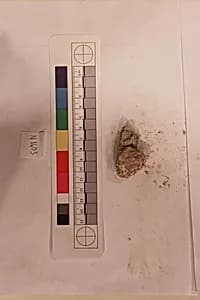
Medium
Stucco (mortar); carved, painted
Dimensions
L4.5 x W 1.5x H2.5
Classification
Stucco
Department
Islamic Art
Museum
Metropolitan Museum of Art, New York, NY
Credit
Rogers Fund, 1948
Accession Number
48.101.1705
Rights
Public Domain
Art Historical Context
This delicate stucco fragment, dating to the 8th–12th century, offers a glimpse into the opulent architectural decorations of the Islamic world during its early medieval golden age. Crafted from mortar-based stucco—a versatile, affordable medium favored in regions from Persia to North Africa and Spain—this small piece (4.5 x 1.5 x 2.5 inches) adorned a mosque, palace, or madrasa. During the Umayyad, Abbasid, and Seljuk eras, stucco became a hallmark of Islamic art, enabling intricate surface embellishments on walls, arches, and mihrabs without the permanence of stone carving. Artisans skillfully carved the stucco while it was still pliable, creating fine patterns of geometric motifs, arabesques, or floral designs that evoke infinity and divine order—core tenets of Islamic aesthetics that avoided human figuration. Traces of paint enhance its vibrancy, a technique that brought architecture to life with jewel-like colors. Such fragments highlight the era's technical innovation and cultural emphasis on beauty in everyday sacred spaces. Acquired through the Rogers Fund in 1948, this artifact in the Metropolitan Museum of Art's Islamic Art Department preserves a tangible link to a thriving civilization's artistic legacy, reminding us how humble materials could inspire awe.