
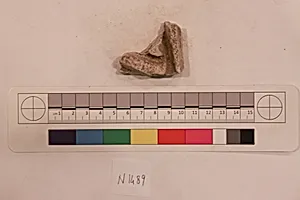
Stucco Fragment
Unknown Artist
probably 8th–12th century
Medium
Stucco; carved, painted
Dimensions
L 5x W3.5 x H2
Classification
Stucco
Department
Islamic Art
Museum
Metropolitan Museum of Art, New York, NY
Credit
Rogers Fund, 1948
Accession Number
48.101.1791
Rights
Public Domain
Art Historical Context
This delicate stucco fragment, dating to the 8th–12th century, offers a tantalizing glimpse into the refined artistry of early Islamic architecture. Housed in the Metropolitan Museum of Art's Islamic Art Department (acquired through the Rogers Fund in 1948), it measures just 5 x 3.5 x 2 inches, likely a surviving piece from a larger decorative panel adorning a mosque, palace, or madrasa. Stucco—a molded plaster made from lime, sand, and water—was a favored medium in the Islamic world for its versatility, allowing artisans to create intricate low-relief carvings that mimicked more precious stonework. The fragment's carved and painted surface highlights masterful techniques: skilled hands incised motifs into wet stucco, which hardened to reveal fine details, then applied vibrant pigments for added depth and color. This combination of carving and polychromy was emblematic of Islamic decorative traditions, blending geometric precision with vegetal flourishes or epigraphy to evoke spiritual harmony and paradise gardens. Though the exact motifs are not specified, such fragments underscore the era's innovative fusion of craft and faith. For visitors, this unassuming piece whispers of grand lost structures, reminding us how everyday materials became canvases for cultural splendor across the medieval Islamic world. A testament to anonymous genius, it invites reflection on art's enduring fragility.