
Stucco Fragment
Unknown Artist
probably 8th–12th century
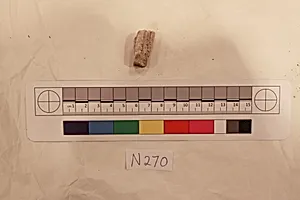
Medium
Stucco; carved
Dimensions
H. 1 3/16 in. (3 cm) W. 9/16 in. (1.5 cm) D. 13/16 in. (2 cm)
Classification
Stucco
Department
Islamic Art
Museum
Metropolitan Museum of Art, New York, NY
Credit
Rogers Fund, 1948
Accession Number
48.101.572
Rights
Public Domain
Art Historical Context
This delicate stucco fragment, carved by an unknown artist likely from the 8th to 12th century, a glimpse into the refined architectural traditions of the Islamic world. Measuring just 1 3/16 inches high, 9/16 inches wide, and 13/16 inches deep, it is a tiny survivor from a larger decorative scheme, possibly adorning the walls or arches of a mosque, palace, orrasa. Acquired through the Rogers Fund in 8, it now resides in the Metropolitan Museum Art's Department of Islamic Art, exemplifying the enduring allure of early medieval craftsmanship. Stucco, a molded plaster made from lime, water, and aggregates, was a versatile medium in Islamic architecture during the Abbasid and subsequent eras. Artisans carved it into intricate patterns—often geometric, floral, or calligraphic—creating affordable yet luxurious surfaces that rivaled stone or wood. This fragment's precise carving highlights the technical skill involved: wet stucco was shaped, dried, and then incised with fine tools to produce textured reliefs that played with light and shadow. Its cultural significance lies in reflecting Islam's emphasis on non-figural ornamentation, fostering spiritual contemplation through beauty. Such fragments remind us how everyday materials elevated sacred and secular spaces across regions like Iraq, Iran, and Central Asia, bridging art and architecture in a golden age of innovation.