
Stucco Fragment
Unknown Artist
probably 8th–12th century
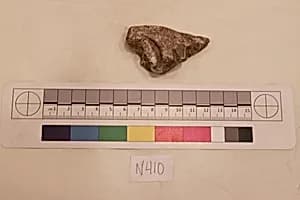
Medium
Stucco; carved
Dimensions
H. 2 3/8 in. (6 cm) W. 1 3/8 in. (3.5 cm) D. 9/16 in. (1.5 cm)
Classification
Stucco
Department
Islamic Art
Museum
Metropolitan Museum of Art, New York, NY
Credit
Rogers Fund, 1948
Accession Number
48.101.712
Rights
Public Domain
Art Historical Context
This delicate stucco fragment, likely carved between the 8th and 12th centuries, offers a glimpse into the refined artistry of early Islamic architecture. Hailing from the Islamic Art department at The Metropolitan Museum of Art—acquired through the Rogers Fund in 8—this tiny piece (just 2 3/8 inches high) exemplifies the use of stucco as a medium in regions like Iran, Iraq, or Central Asia. During this period, stucco was prized for adorning mosques, palaces, and tombs, where its moldable quality allowed artisans to create intricate surface decorations after it hardened. Carved stucco represented an innovative technique in Islamic design, enabling complex patterns without the weight of stone. Artisans would model wet stucco over cores or directly onto walls, then incise motifs—often geometric, floral, or calligraphic—once dry. Though the exact design of this fragment remains unrecorded, its preservation highlights the fragility and skill involved; such pieces were integral to creating luminous interiors that evoked spiritual harmony and paradise gardens, core themes in Islamic culture. For visitors, this unassuming relic underscores how everyday materials fostered extraordinary beauty, bridging architecture and ornament in a golden age of Islamic innovation.