
Stucco Fragment
Unknown Artist
probably 8th–12th century
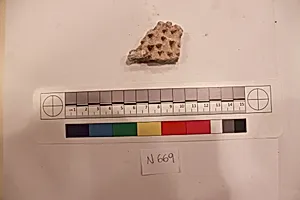
Medium
Stucco; carved, painted
Dimensions
H. 1 3/4 in. (4.5 cm) W. 1 3/16 in. (3 cm) D. 9/16 in. (1.5 cm)
Classification
Stucco
Department
Islamic Art
Museum
Metropolitan Museum of Art, New York, NY
Credit
Rogers Fund, 1948
Accession Number
48.101.971
Rights
Public Domain
Art Historical Context
This delicate stucco fragment, dating to the 8th–12th century, a glimpse into the refined artistry of early Islamic architecture. Housed in the Metropolitan Museum of Art's Department Islamic Art and acquired through the Rogers Fund in 1948, it measures just 1 3/4 inches high, hinting at its role as part of a larger decorative ensemble—likely adorning the walls, arches, or mihrabs of a mosque, palace, or residence across the Islamic world, from Iran to North Africa. Crafted from stucco—a versatile, moldable plaster made from gypsum or lime—the fragment showcases sophisticated carving techniques. Intricate patterns were incised by hand, then vividly painted, a hallmark of Islamic ornamental design that evoked luxury without relying on costly stone or wood. This medium allowed artisans to create complex motifs like arabesques, geometric interlaces, or vegetal forms, blending functionality with spiritual symbolism to beautify sacred and secular spaces during the Abbasid and Fatimid eras. Though small and anonymous, this piece embodies the cultural brilliance of medieval Islam, where decoration fostered harmony and infinity. Visitors can appreciate how such fragments preserve the ephemeral splendor of vanished monuments, inviting us to imagine the vibrant halls they once graced.