
Stucco Fragment
Unknown Artist
probably 8th–12th century
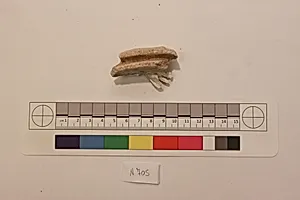
Medium
Stucco; carved
Dimensions
H. 2 3/16 in. (5.5 cm) W. 13/16 in. (2 cm) D. 1 in. (2.5 cm)
Classification
Stucco
Department
Islamic Art
Museum
Metropolitan Museum of Art, New York, NY
Credit
Rogers Fund, 1948
Accession Number
48.101.1007
Rights
Public Domain
Art Historical Context
This delicate stucco fragment, dating to the 8th–12th century, offers a glimpse into the refined ornamental traditions of early Islamic art. Carved from stucco—a versatile mixture of lime, sand, and water—this tiny piece (just over 2 inches high) likely once adorned a mosque, palace, or mausoleum in regions like Iran or Iraq, where such decorations flourished during the Abbasid and Seljuk periods. Its modest dimensions highlight the precision required for architectural embellishments, transforming simple surfaces into intricate displays of craftsmanship. Stucco became a hallmark medium in Islamic architecture due to its affordability and workability, allowing artisans to incise detailed patterns while the material was still pliable. Though the exact design of this fragment remains unrecorded, it exemplifies the era's emphasis on geometric motifs, arabesques, and calligraphy, which conveyed spiritual harmony without figurative imagery. Acquired through the Rogers Fund in 1948, it now resides in The Metropolitan Museum of Art's Islamic Art department, preserving a fragment of a vibrant cultural legacy. For visitors, this unassuming relic underscores how everyday materials sparked artistic innovation, bridging utility and beauty in medieval Islamic societies.