
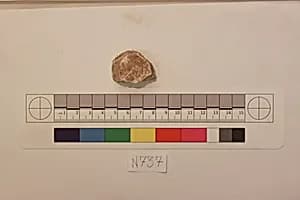
Stucco Fragment
Unknown Artist
probably 8th–12th century
Medium
Stucco; carved
Dimensions
H. 1 3/8 in. (3.5 cm) W. 1 in. (2.5 cm) D. 9/16 in. (1.5 cm)
Classification
Stucco
Department
Islamic Art
Museum
Metropolitan Museum of Art, New York, NY
Credit
Rogers Fund, 1948
Accession Number
48.101.1039
Rights
Public Domain
Art Historical Context
This delicate stucco fragment, carved by an unknown artist likely between the 8th and 12th centuries, offers glimpse into the refined architectural decoration of the Islamic world. Measuring just 1 3/8 inches high, 1 inch wide, and /16 inch deep, its diminutive scale highlights the precision of ancient craftsmanship. Acquired through the Rogers Fund in 8, it resides in the Metropolitan Museum of's Department of Islamic Art, where exemplifies the era's stucco work from regions like Iran or Iraq. Stucco, a molded plaster made from lime, sand, and water, was a favored medium in early Islamic architecture during the Abbasid and Seljuk periods. Artisans carved it into intricate patterns—often geometric motifs, arabesques, or Kufic script—to adorn mosques, palaces, and mihrabs. This technique allowed for lightweight, affordable embellishment on walls and niches, bridging Byzantine and Persian traditions while adhering to Islamic aniconism by emphasizing abstraction and rhythm. Though a mere fragment, it whispers of grander structures, evoking the opulence of medieval Islamic courts. Such pieces remind us how everyday materials transformed into art, preserving cultural splendor across centuries for modern eyes.