
Stucco Fragment
Unknown Artist
probably 8th–12th century
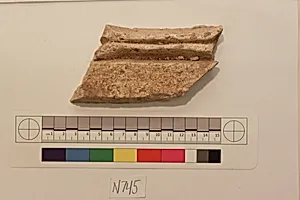
Medium
Stucco; carved, painted
Dimensions
H. 4 3/4 in. (12 cm) W. 2 9/16 in. (6.5 cm) D. 13/16 in. (2 cm)
Classification
Stucco
Department
Islamic Art
Museum
Metropolitan Museum of Art, New York, NY
Credit
Rogers Fund, 1948
Accession Number
48.101.1047
Rights
Public Domain
Art Historical Context
This exquisite stucco fragment, likely created between the 8th and 12th centuries, invites visitors to marvel at the sophistication of early Islamic artistry. Housed in the Metropolitan Museum of Art's Department Islamic Art and acquired through the Rogers Fund 1948, this piece—measuring just 4 3/4 inches high—survives as a testament to the architectural splendor of the era. Its modest dimensions belie the skill involved in shaping stucco, a versatile medium made from lime plaster, into durable decorations. Carved in relief and enhanced with paint, the fragment highlights a key technique in Islamic architecture, where stucco allowed artisans to craft intricate ornamentation for mosques, palaces, and tombs. During this dynamic period, spanning the Abbasid and Fatimid dynasties, such work adorned interiors across regions from Iraq to North Africa and Spain, evoking spiritual harmony through tactile depth and color. The painted surface, now faded, would have once glowed with vivid hues, amplifying the play of light in sacred spaces. Though attributed to an unknown artist, this fragment embodies the anonymous mastery of Islamic craftsmen, whose innovations in stucco influenced centuries of global design. A quiet survivor of time, it underscores the cultural richness of medieval Islam and the value of preserving even the smallest artifacts.