
Study for "The Wise and Foolish Virgins"
1826 to 1850
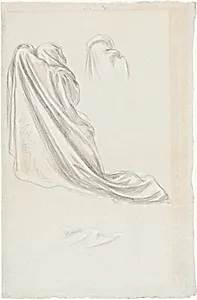
Medium
black chalk heightened with white on blue wove paper
Dimensions
overall: 45 x 29.5 cm (17 11/16 x 11 5/8 in.)
Classification
Drawing
Department
CG-E
Museum
National Gallery of Art, Washington, D.C.
Credit
Gift of William B. O'Neal
Accession Number
1995.52.106
Rights
Public Domain
Art Historical Context
This delicate drawing, *Study for "The Wise Foolish Virgins" by Frederic, Lord Leighton offers a glimpse into the preparatory process of one of the Victorian master's allegorical masterpieces. Created between 1826 and 1850, it depicts figures from the biblical parable in Matthew 25, symbolizing prudence and folly as the wise virgins prepare their lamps for the bridegroom's arrival. Leighton, a leading figure in the Academic art movement, was renowned for his classical themes, precise anatomy, and luminous effects, drawing inspiration from Renaissance masters like Raphael. Executed in black chalk heightened with white on blue wove paper (45 x 29.5 cm), the medium exemplifies 19th-century drawing techniques. The blue paper provides a subtle tonal ground, allowing the chalk to model forms with depth and the white highlights to evoke ethereal light—perfect for studies meant to translate into oil paintings. Such preparatory works were essential in Leighton's meticulous studio practice, bridging sketch and finished canvas. Now in the National Gallery of Art's collection (gift of William B. O'Neal, Department CG-E), this study highlights Leighton's technical virtuosity and enduring fascination with moral narratives, inviting visitors to ponder the virtues of foresight amid Victorian England's cultural reverence for biblical storytelling.
About the Artist
Frederic, Lord Leighton · 1830–1896
Frederic Leighton, 1st Baron Leighton (1830–1896), was born on 3 December 1830 in Scarborough, England, to a prosperous medical family. His father, Dr. Frederic Septimus Leighton, and mother, Augusta Susan, provided him with financial security throughout his life, while his grandfather, Sir James Boniface Leighton, had served as physician to Russian tsars Alexander I and Nicholas I. After early ed...