
Study of a leg and foot
last quarter 19th–early 20th century
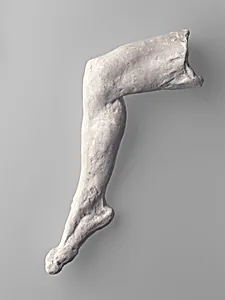
Medium
Cast plaster
Dimensions
Length: 7 1/8 in. (18.1 cm)
Classification
Sculpture
Culture
French
Department
European Sculpture and Decorative Arts
Museum
Metropolitan Museum of Art, New York, NY
Credit
Gift of Auguste Rodin, 1912
Accession Number
12.12.11
Rights
Public Domain
Tags
Art Historical Context
Auguste Rodin, one of the most influential sculptors of the late nineteenth century, created this intimate plaster study as part of his lifelong exploration of the human body. Working during the last quarter of the nineteenth century into the early twentieth, Rodin moved away from the polished ideals of academic sculpture toward a more expressive, naturalistic approach. Fragments like this leg and foot allowed him to isolate and intensify the beauty of anatomical form, gesture, and surface texture. Cast in plaster, the small work—measuring just over seven inches—reveals Rodin’s working method. He often modeled directly from life, preserving every nuance of muscle and bone before translating successful studies into larger bronze or marble compositions. The material’s matte surface and crisp detail highlight his interest in light and shadow, giving the fragment a surprising sense of life and movement. Donated by the artist himself to the Metropolitan Museum in 1912, the piece offers visitors a rare glimpse into Rodin’s creative process and his belief that even the smallest portion of the body could convey profound emotional and formal power.
About the Artist
Auguste Rodin · 1840–1917
François Auguste René Rodin (1840-1917) stands as the founder of modern sculpture, transforming the art form from academic tradition into expressive modernism. Born into a working-class Parisian family, Rodin faced early rejection, failing three times to gain admission to the prestigious École des Beaux-Arts. This setback forced him to work as a craftsman for nearly two decades, though his 1875 tr...