
Sugar Bowl
Unknown Artist
ca. 1850–1900
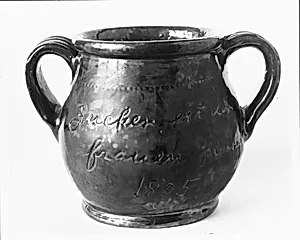
Medium
Earthenware; Redware
Dimensions
H. 5 1/2 in. (14 cm)
Classification
Sugar bowl
Culture
American
Department
The American Wing
Museum
Metropolitan Museum of Art, New York, NY
Credit
Rogers Fund, 1917
Accession Number
17.203.6
Rights
Public Domain
Art Historical Context
Nestled in The Metropolitan Museum of Art's American Wing, this modest sugar bowl exemplifies the everyday artistry of 19th-century American pottery Crafted from redware earthenware around 1850–1900 by an unknown artist, it stands just 5½ inches (14 cm) tall, perfect for gracing a household table. Redware, fired from iron-rich clay that yields its signature warm reddish hue, was a staple of American folk pottery, often produced in small workshops across Pennsylvania, New England, and the Mid-Atlantic. During the Victorian era, sugar bowls like this one played a central role in domestic life, holding refined sugar—a luxury commodity symbolizing growing middle-class prosperity as trade expanded. Potters wheel-threw these vessels for durability and functionality, sometimes enhancing them with simple slip decorations or minimal glazes, though this example highlights the material's natural beauty and tactile appeal. Its acquisition via the Rogers Fund in 1917 underscores early 20th-century efforts to preserve humble, vernacular objects as vital cultural artifacts. Today, this unpretentious piece invites us to appreciate the anonymous makers who shaped America's material culture, bridging utility and subtle aesthetic charm in the nation's home life.