
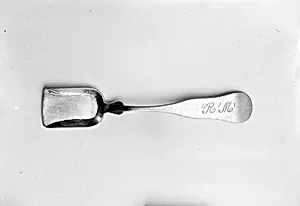
Sugar Shovel
1810–30
Medium
Silver
Dimensions
L. 6 in. (15.2 cm)
Classification
Sugar Shovel
Culture
American
Department
The American Wing
Museum
Metropolitan Museum of Art, New York, NY
Credit
Bequest of Alphonso T. Clearwater, 1933
Accession Number
33.120.458
Rights
Public Domain
Art Historical Context
Nestled in the Metropolitan Museum of Art's American Wing, this elegant *Sugar Shovel* by. M. Nichols exemplifies early 19th-century American silver craftsmanship. Dating from 1810–30, the 6-inch-long silver utensil was designed for the refined ritual of tea service, scooping lumps of sugar from ornate bowls—a staple in prosperous households during the Federal period. Nichols, a skilled American silversmith likely working in a bustling urban center like New York or Philadelphia, crafted it with precision, highlighting the era's growing mastery of fine metalwork. Silver objects like this shovel were more than functional; they symbolized social status and hospitality in post-Revolutionary America. As sugar consumption boomed with trade from the Caribbean and Europe, such tools blended practicality with understated elegance, often featuring simple, neoclassical lines that echoed the young nation's aspirations for sophistication. Bequeathed by Alphonso T. Clearwater in 1933, this piece offers a tangible glimpse into domestic life, where everyday luxuries underscored emerging American identity and refinement.