
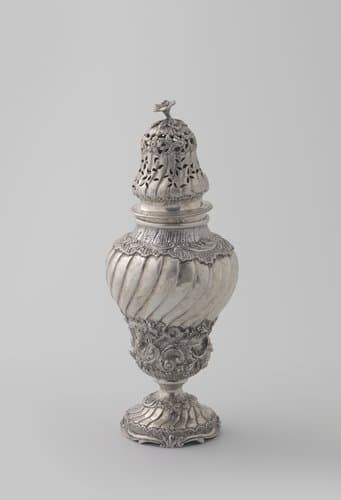
Suikerstrooier van zilver, omgekeerde peervorm op gewelfde voet met getordeerde opengewerkte dop versierd met gedreven rocailles, ranken, bloemen en vogels.
1746
Medium
silver (metal)
Dimensions
346; 23.7; 9.5
Rights
Public Domain
About this artwork
height 23.7 cm x diameter 9.5 cm x weight 346 gr
Art Historical Context
This elegant silver sugar caster, crafted by Dutch silversmith Jan Verdoes in 1746, exemplifies the refined luxury of 18th-century European tableware. Standing 23.7 cm tall with a graceful inverted pear shape on a domed foot, the piece features a twisted, openwork lid adorned with chased rocaille motifs, scrolling vines, flowers, and delicate birds. Its 346-gram weight and 9.5 cm diameter reflect the meticulous craftsmanship typical of fine silver objects designed for affluent households. In the Rococo period, such ornate casters highlighted sugar’s status as an exotic and costly import from colonial trade routes. Verdoes employed traditional chasing techniques to create lively, asymmetrical decoration that captured the era’s playful elegance while ensuring the functional perforated lid allowed for controlled sprinkling. Today, this work offers visitors a tangible connection to 18th-century dining rituals and the artistry of Dutch silver, where everyday utility merged seamlessly with sculptural beauty.