
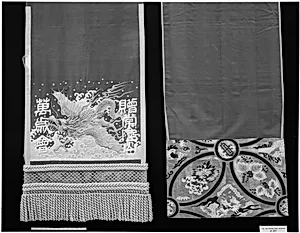
Sumo Wrestler's Ceremonial Apron (Kesho Mawashi)
Unknown Artist
early 20th century
Medium
Embroidered velvet; silk, metallic thread
Dimensions
240 x 29 in. (609.6 x 73.7 cm)
Classification
Costumes
Culture
Japan
Department
Asian Art
Museum
Metropolitan Museum of Art, New York, NY
Credit
Gift of T. Hitachiyama, 1908
Accession Number
08.25.1
Rights
Public Domain
Tags
Art Historical Context
Step into the ring of Japanese sumo tradition with this stunning *Sumo Wrestler's Ceremonialon (Kesho Maw)*, a lavish garment from early 20th-century Japan. Worn by rikishi (sumo wrestlers) during the dramatic dohyo-iri ceremony at tournaments, the kesho mawashi as a symbol of prestige and spectacle. Unlike the plain mawashi used actual bouts, this ornate apron draped around the waist to dazzle audiences, its immense size—nearly 20 feet long and over 2 feet wide—accommodating the wrestlers' powerful builds while creating a flowing visual display. Crafted from luxurious embroidered velvet with silk and shimmering metallic threads, the apron showcases exquisite Japanese needlework techniques. Vibrant motifs of dragons, flowers, and leaves evoke imperial power, natural beauty, and prosperity—common symbols in sumo iconography that link the wrestlers to mythical strength and seasonal renewal. The intricate embroidery highlights the artistry of anonymous craftspeople who elevated everyday costume into high ceremonial fashion. A treasured gift to the Metropolitan Museum of Art from T. Hitachiyama in 1908, this piece captures sumo's cultural zenith during Japan's Meiji era, when the sport gained international fame. It invites visitors to appreciate not just the physical might of sumo, but the delicate mastery behind its rituals.