
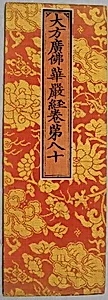
明 織錦經面|Sutra cover
Unknown Artist
16th century
Medium
Plain-weave silk with supplementary weft patterning
Dimensions
Overall: 13 11/16 x 4 7/8 x 1/4 in. (34.8 x 12.4 x 0.6 cm)
Classification
Textiles-Woven
Culture & Period
China · Ming dynasty (1368–1644)
Department
Asian Art
Museum
Metropolitan Museum of Art, New York, NY
Credit
Purchase, Friends of Asian Art Gifts, in honor of James C. Y. Watt, 2011
Accession Number
2011.221.21
Rights
Public Domain
Art Historical Context
This exquisite sutra cover, crafted in 16th-century Ming dynasty China, served as a protective and reverential wrapping for Buddhist scriptures. During the Ming period (1368–1644), a golden age of artistic refinement and imperial patronage, such textiles embodied deep spiritual devotion. Sutras—sacred Buddhist texts—were often enshrined in ornate covers like this one, blending utility with profound symbolism to honor the dharma and safeguard holy writings from wear. Woven from plain-weave silk with supplementary weft patterning—a sophisticated technique where additional colored threads float over the base weave to create intricate brocade designs—this artwork showcases the pinnacle of Chinese textile mastery. The result is a luxurious, tactile surface likely adorned with floral motifs or auspicious symbols, evoking the era's love for opulent silks exported along the Silk Road. At just 13 11/16 x 4 7/8 inches, its compact form suggests it encased a handscroll or boxed sutra, perfect for temple rituals or scholarly contemplation. Housed in the Metropolitan Museum of Art's Asian Art Department (Purchase, Friends of Asian Art Gifts, in honor of James C. Y. Watt, 2011), this anonymous masterpiece highlights Ming China's fusion of piety, craftsmanship, and elegance, inviting us to appreciate the quiet artistry behind sacred traditions.