
Sword Guard (Tsuba)
Unknown Artist
18th century
Medium
Iron, copper
Dimensions
H. 2 7/8 in. (7.3 cm); W. 2 3/4 in. (7 cm)
Classification
Sword Furniture-Tsuba
Culture
Japanese
Department
Arms and Armor
Museum
Metropolitan Museum of Art, New York, NY
Credit
Funds from various donors, 1946
Accession Number
46.122.156
Rights
Public Domain
Art Historical Context
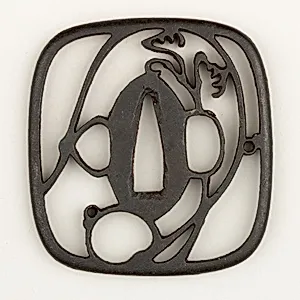
This exquisite **Sword Guard (Tsub)** from 18th-century Japan exemplifies the masterful metalwork of the Edo period, when sword fittings evolved from functional guards into coveted art objects. As the hand protector on a katana or wakizashi, the tsuba sat prominently between the blade and hilt, blending utility with aesthetic refinement. Crafted by an unknown artist, this measures just 2 7/8 by 2 3/4 inches, yet its compact form allowed for intricate designs that reflected samurai values of harmony, nature, and mythology. Forged from iron for durability and inlaid with copper for subtle contrast and corrosion resistance, the tsuba showcases advanced Japanese techniques like piercing, hammering, and patination. Iron provided the sturdy base, while copper accents highlighted decorative motifs—common in this era's openwork (sukashi) styles that balanced strength and elegance. These fittings were status symbols, often customized to match a warrior's lineage or personal philosophy. Housed in the Metropolitan Museum of Art's Arms and Armor Department (acquired through donor funds in 1946), this tsuba invites us to appreciate Japan's fusion of martial tradition and artistry. During peacetime Edo Japan, such objects turned weapons into wearable sculptures, bridging functionality and beauty for today's visitors.