
Sword Guard (Tsuba)
Unknown Artist
ca. 1615–1868
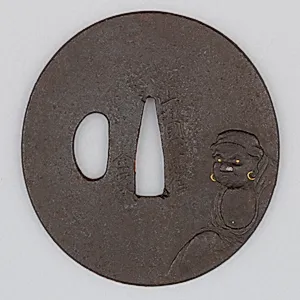
Medium
Iron, copper
Dimensions
H. 2 15/16 in. (7.5 cm); W. 2 3/4 in. (7 cm); thickness 3/16 in. (0.5 cm); Wt. 3.4 oz. (96.4 g)
Classification
Sword Furniture-Tsuba
Culture
Japanese
Department
Arms and Armor
Museum
Metropolitan Museum of Art, New York, NY
Credit
Gift of Bashford Dean, 1919
Accession Number
19.154.36
Rights
Public Domain
Tags
Art Historical Context
This exquisite **Sword Guard (Tsuba)**, crafted from iron and copper during Japan's Edo period (ca. 1615–1868), served as a vital component of the samurai sword. Positioned between the blade and hilt, the tsuba protected the hand while doubling as a canvas for artistic expression. Its modest dimensions—about 3 inches across and weighing just 3.4 ounces—belie its robust construction and cultural weight, reflecting the era's blend of martial utility and refined craftsmanship under the peaceful Tokugawa shogunate. Japanese tsuba makers excelled in techniques like piercing (sukashi) and inlaying softer metals such as copper into iron for decorative motifs, often evoking nature, mythology, or daily life. Though the artist's identity is unknown, this piece exemplifies the period's school traditions, where guards became collectible art objects prized for their balance of strength and elegance. The "Men" tag hints at possible figural designs celebrating masculine ideals or warriors. A gift to the Metropolitan Museum of Art from Bashford Dean in 1919, this tsuba invites us to ponder the samurai's world—fierce yet aesthetically attuned—bridging function and beauty in Japanese arms and armor.