
Sword Guard (Tsuba)
Unknown Artist
ca. 1615–1868
Medium
Copper alloy (sentoku), copper-silver alloy (shibuichi), copper-gold alloy (shakudō), silver, gold, copper
Dimensions
H. 3 1/2 in. (8.9 cm); W. 2 7/8 in. (7.3 cm); thickness 1/2 in. (1.3 cm); Wt. 7 oz. (198.4 g)
Classification
Sword Furniture-Tsuba
Culture
Japanese
Department
Arms and Armor
Museum
Metropolitan Museum of Art, New York, NY
Credit
H. O. Havemeyer Collection, Bequest of Mrs. H. O. Havemeyer, 1929
Accession Number
29.100.981
Rights
Public Domain
Tags
Art Historical Context
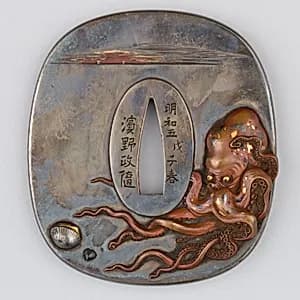
This exquisite *Sword Guard (Tsub)*, crafted in Japan during the Edo period (ca. 1615–1868), the artistry of samurai sword fittings. As the hand guard on a katana or wakizashi, the tsuba served both a practical purpose—protecting the hand during combat—and an aesthetic one, transforming weapons into wearable sculptures. Produced amid a time of relative peace under the Tokugawa shogunate, tsuba evolved from simple iron guards into elaborate masterpieces, often featuring motifs from nature that reflected Zen-inspired appreciation for the natural world. Masterfully fashioned from a luxurious mix of alloys—sentoku (a golden copper alloy), shibuichi (silvery patina), shakudō (dark alloy), silver, gold, and copper—the tsuba showcases advanced metalworking techniques like inlay (zōgan) and patination. Its openwork design depicts dynamic sea creatures: an octopus entwined with shells, evoking the fluidity and mystery of Japan's coastal life. Measuring 3½ inches high, this hefty 7-ounce piece highlights the smith's skill in balancing form, weight, and intricate detailing. Housed in the Metropolitan Museum of Art's Arms and Armor Department from the renowned H.O. Havemeyer Collection, this unsigned tsuba underscores the anonymous yet virtuoso craftsmanship of Edo-era artisans. It invites visitors to ponder how even tools of war became emblems of poetic beauty in Japanese culture.