
Sword Guard (Tsuba)
Unknown Artist
18th century
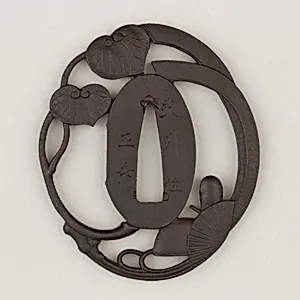
Medium
Iron, copper
Dimensions
H. 2 3/4 in. (7 cm); W. 2 1/8 in. (5.4 cm); thickness 3/16 in. (0.5 cm); Wt. 1.9 oz. (53.9 g)
Classification
Sword Furniture-Tsuba
Culture
Japanese
Department
Arms and Armor
Museum
Metropolitan Museum of Art, New York, NY
Credit
Gift of Mrs. Adrian H. Joline, 1914
Accession Number
14.60.49
Rights
Public Domain
Tags
Art Historical Context
This exquisite 18th-century Japanese guard, or *tsuba*, served as a vital component of the samurai sword's fittings, protecting the hand from an opponent's blade while allowing fluid movement. Crafted during the Edo period time of relative peace when martial arts emphasized artistry over warfare—*tsuba* evolved from functional guards into highly prized decorative objects. Often exchanged as gifts or heirlooms, they showcased the wearer's taste and status, blending utility with aesthetic refinement. Made of iron with copper accents, this compact piece measures just 2¾ inches high and weighs under 2 ounces, highlighting the precision of Japanese metalworking techniques. Its leaf motif, pierced and possibly inlaid, evokes nature's elegance, a common theme in Edo-era designs symbolizing transience and harmony. Such openwork (*sukashi*) methods allowed light to play through the form, adding depth and dynamism. Now in the Metropolitan Museum of Art's Arms and Armor Department, gifted in 1914, this *tsuba* exemplifies the fusion of craftsmanship and cultural symbolism, inviting visitors to appreciate the subtle artistry of Japan's warrior heritage.