
Sword Guard (Tsuba)
Unknown Artist
early 18th century
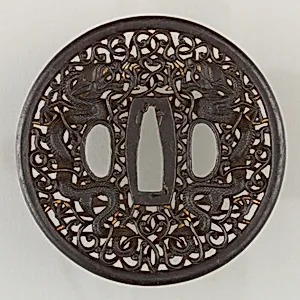
Medium
Iron, gold, copper
Dimensions
Diam. 3 5/16 in. (8.4 cm); thickness 3/16 in. (0.5 cm); Wt. 4.4 oz. (124.7 g)
Classification
Sword Furniture-Tsuba
Culture
Japanese
Department
Arms and Armor
Museum
Metropolitan Museum of Art, New York, NY
Credit
Gift of Mrs. Adrian H. Joline, 1914
Accession Number
14.60.69
Rights
Public Domain
Tags
Art Historical Context
This exquisite **Sword Guard (Tsub)** from early 18th-century Japan the masterful craftsmanship of the Edo period, when samurai swords were not just weapons but symbols of status and artistry. Tsuba served as protective handguards on katana blades, blending functionality with elaborate decoration. Crafted by an unknown artist, this piece measures just 3 5/16 inches in diameter yet weighs a substantial 4.4 ounces, highlighting its robust iron construction designed to withstand combat while showcasing aesthetic refinement. Fashioned from iron inlaid with gold and copper, the tsuba likely features intricate dragon motifs—a tag denoting its thematic focus. Dragons in Japanese art symbolize imperial power, protection, and the elemental forces of nature, evoking the mythical guardians of the samurai spirit. Techniques such as nunome-zōgan (hammered metal inlay) would have allowed artisans to create shimmering contrasts, transforming a utilitarian object into a wearable sculpture. These fittings were produced by specialized Goto or Nishigaki schools, though this unsigned example reflects the era's widespread excellence in metalwork. Now in the Metropolitan Museum of Art's Arms and Armor Department, gifted by Mrs. Adrian H. Joline in 1914, this tsuba invites visitors to appreciate how Japanese warriors fused martial utility with poetic beauty, bridging the worlds of war and wonder.