
Sword-Hilt Collar and Pommel (Fuchigashira)
Unknown Artist
ca. 1615–1868
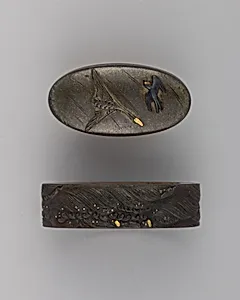
Medium
Copper-silver alloy (shibuichi), gold
Dimensions
Fuchi (a); H. 1 1/2 in. (3.8 cm); Wt. 0.7 oz. (19.8 g); kashira (b); H. 1 5/16 in. (3.3 cm); Wt. 0.3 oz. (8.5 g)
Classification
Sword Furniture-Fuchi-Kashira
Culture
Japanese
Department
Arms and Armor
Museum
Metropolitan Museum of Art, New York, NY
Credit
H. O. Havemeyer Collection, Bequest of Mrs. H. O. Havemeyer, 1929
Accession Number
29.100.1307a, b
Rights
Public Domain
Tags
Art Historical Context
This elegant pair of *fuchigashira*—a sword-hilt collar (*fuchi*) and pom (*kashira*)—hails from Japan’s Edo period (ca. 1615–1868), a time of relative peace when samurai culture flourished through refined craftsmanship. These fittings adorned the hilts of katana swords, transforming functional weapons into symbols of status and artistry. Produced by an unknown artisan, they exemplify the intricate metalwork that elevated sword mounts (*koshirae*) to wearable sculptures. Crafted from shibuichi, a copper-silver alloy prized for its subtle, shimmering patina, the pieces are enriched with gold accents. Bird motifs, a common theme in Japanese art symbolizing freedom and the natural world, likely grace their surfaces, achieved through techniques like hammering, chasing, and inlay. The *fuchi* measures 1 1/2 inches high and weighs 0.7 oz., while the lighter *kashira* stands 1 5/16 inches, balancing delicacy with durability. Part of the Metropolitan Museum of Art’s Arms and Armor collection, gifted through the H. O. Havemeyer bequest in 1929, these fittings highlight Japan’s *kinko* tradition of metalworking. They remind us how Edo artisans blended utility, beauty, and Zen-inspired harmony, turning everyday arms into timeless treasures.