
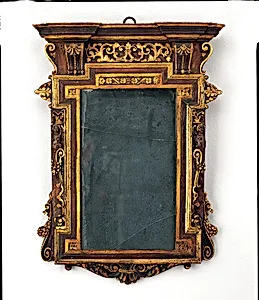
Tabernacle mirror frame
Unknown Artist
1550–80
Medium
Poplar and walnut
Dimensions
Overall: 19 3/4 × 14 1/8 in. (50.2 × 35.8 cm) Sight: 12 3/16 × 7 5/16 in. (31 × 18.5 cm) Rabbet: Mirror
Classification
Frames
Culture
Italian, South Lombardy
Department
Robert Lehman Collection
Museum
Metropolitan Museum of Art, New York, NY
Credit
Robert Lehman Collection, 1975
Accession Number
1975.1.2096
Rights
Public Domain
Art Historical Context
This exquisite *Tabernacle mirror frame* South Lombardy, Italy, dates to the mid- to late 16th century (1550–80), a vibrant period of Renaissance craftsmanship. Crafted from poplar and walnut—durable woods favored for their workability and rich grain—the frame exemplifies the tabernacle style, which mimics the architectural niches and pediments of small altarpieces or sacred tabernacles. Measuring about 20 by 14 inches overall, it elegantly frames a mirror (12 by 7 inches in sight size), transforming a functional object into a sculptural jewel. In Renaissance Italy, such frames were more than mere supports; they were artistic statements reflecting the era's fusion of sacred and secular design. South Lombardy's workshops, known for intricate woodcarving, produced these for affluent homes, where mirrors symbolized luxury and introspection amid growing interest in perspective and illusionism. The unknown artisan's skill in shaping the wood into ornate, probably gilded or painted motifs (typical of the style) highlights the period's technical mastery and cultural prestige. Now part of the Robert Lehman Collection at The Metropolitan Museum of Art (acquired 1975), this frame invites us to appreciate how everyday luxury items embodied Renaissance ingenuity, bridging architecture, sculpture, and domestic life.