
Table Spoon
1770–1800
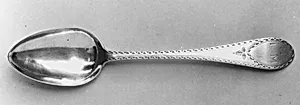
Medium
Silver
Dimensions
L. 9 1/4 in. (23.5 cm)
Classification
Spoon
Culture
American
Department
The American Wing
Museum
Metropolitan Museum of Art, New York, NY
Credit
Bequest of Charles Allen Munn, 1924
Accession Number
24.109.69
Rights
Public Domain
Art Historical Context
This elegant silver table spoon, crafted by the American silversmiths and Williamson between 1770 and 1800, exemplifies the refined craftsmanship of the early American Republic. Measuring 9¼ inches in length, it was designed for everyday dining in affluent households, where silver flatware symbolized wealth and sophistication amid the young nation's post-Revolutionary optimism. Housed in The American Wing of the Metropolitan Museum Art, it entered the collection through the generous bequest of Charles Allen M in 1924. Silver was a prestigious medium in 18th-century America, for its luster and malleability, allowing skilled artisans like Richards and Williamson—likely Philadelphia-based partners—to create functional yet decorative objects through techniques such as hammering, soldering, and possibly subtle engraving. During this era, American silversmiths drew inspiration from British and European styles while developing a distinct national identity, free from colonial constraints. As a survivor of domestic life over two centuries ago, this spoon offers a tangible link to the Federal period's emerging middle class, reminding us how even utensils reflected cultural aspirations and the artistry of everyday objects.