
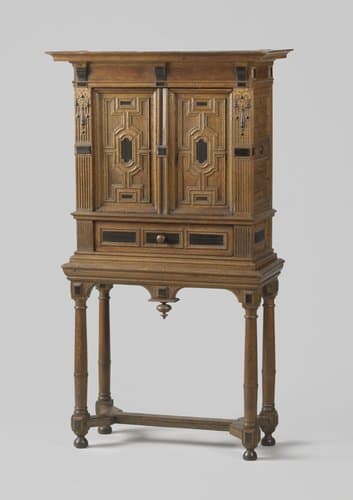
Tafelkast met cornis-versiering in de deuren en spiegelpanelen in de laden. Poten in de vorm van Toscaanse zuilen
ca. 1600 - ca. 1650
Medium
wood (plant material)
Dimensions
39.5; 164.5; 33; 92.5
Rights
Public Domain
About this artwork
breedte 164,5 cm x breedte 92,5 cm x diepte 39,5 cm x gewicht 33 kg
Art Historical Context
This exquisite *Tafelkast met cornisversiering in deuren en spiegelpanel in de laden. Pot in de vorm van Tosanse zuilen* (Table Cabinet with Cornice Decoration the Doors and Mirror Panels in the Drawers, in the Form of Tus Columns) is a masterful example of anonymous Dutch craftsmanship from around 1600–1650. Measuring approximately 164.5 cm wide, 92.5 cm high, 39.5 cm deep, and weighing 33 kg, this wooden cabinet stands as a stately piece of furniture, blending utility with elegance. Its sturdy form, elevated on legs mimicking the simple, robust Tuscan columns of classical architecture, reflects the Renaissance revival of ancient Roman motifs in Northern Europe. Crafted during the Dutch Golden Age, when trade and prosperity fueled innovations in domestic arts, the cabinet showcases refined joinery techniques typical of 17th-century cabinetmakers. The ornate cornice atop the doors adds architectural grandeur, while the innovative mirror panels embedded in the drawers served both practical and decorative purposes—enhancing light in dim interiors and displaying valuables with a touch of luxury. These elements highlight the period's fusion of function and opulence, where furniture became a status symbol for affluent burghers. Though unattributed, this *tafelkast* embodies the cultural shift toward comfortable, classically inspired homes in the Netherlands, offering visitors a tangible glimpse into early modern life. Its enduring appeal lies in its harmonious proportions and subtle sophistication, inviting us to appreciate the unsung artistry of everyday objects.
About the Artist
anonymous
In the vast tapestry of art history, "Anonymous" stands not as a singular individual but as a collective designation for countless unidentified creators whose works have endured across millennia. These artists, spanning prehistoric cave painters to medieval illuminators and folk craftsmen, produced the foundational layers of human visual culture. Prior to the Renaissance, when individual fame emer...