
Takasago Harbor
ca. 1760
Medium
Woodblock print; ink and color on paper
Dimensions
13 3/4 x 5 3/4 in. (34.9 x 14.6 cm)
Classification
Prints
Culture & Period
Japan · Edo period (1615–1868)
Department
Asian Art
Museum
Metropolitan Museum of Art, New York, NY
Credit
Gift of Mrs. Morris Manges, in memory of her husband, Dr. Morris Manges, 1947
Accession Number
JP3043
Rights
Public Domain
Tags
Art Historical Context
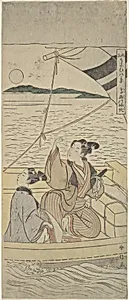
Suzuki Harunobu's *Takasago Harbor*, around 1760, is a captivating woodblock print from Japan's Edo period (16151868), a time of relative peace and flourishing urban culture in cities like Edo (modern Tokyo). This intimate work, measuring just 13¾ x 5¾ inches, depicts a bustling harbor scene with boats and figures, evoking the "floating world" of ukiyo-e—the popular art form celebrating everyday pleasures, theater, and nature. Harunobu, a pioneer of full-color nishiki-e prints (ink and color on paper), revolutionized woodblock printing by layering vibrant hues through precise carving and multiple color blocks, a technique that brought unprecedented realism and depth to affordable art for the masses. His style often featured graceful figures and poetic landscapes, blending beauty with subtle narrative charm. Here, the harbor likely nods to Takasago, a legendary pine-shaded site symbolizing enduring love in Japanese folklore, infusing the scene with cultural resonance. Housed in the Metropolitan Museum of Art's Asian Art department, this print exemplifies how Edo artists captured transient moments, making high art accessible and influencing global aesthetics, from Impressionism to modern design. A gift in memory of Dr. Morris Manges, it invites visitors to savor the delicate interplay of color and composition.
About the Artist
Suzuki Harunobu · 1725–1770
Suzuki Harunobu (c. 1725-1770) was a Japanese ukiyo-e artist who revolutionized woodblock printing by developing nishiki-e—full-color prints using multiple woodblocks—in 1765. Before Harunobu, Japanese prints were limited to two or three colors; his innovation unleashed the entire artist's palette, transforming ukiyo-e into the vibrant art form that would later captivate Western artists from Manet...