
BK-1966-154
Medium
turning
Rights
Public Domain
About this artwork
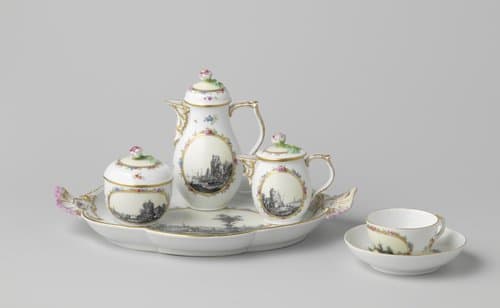
Tête-à-tête bestaande uit een blad, een koffiekan, een theepot, een melkkan, een suikerpot en één kop en schotel. Beschilderd binnen ovale velden met landschappen in encre-de-chine omgeven door een bloemslinger op een gele grond. Gemerkt met een scepter in onderglazuurblauw.
Art Historical Context
This elegant tête-à-tête service, created around 1780 by the Königliche Porzellan Manufaktur (KPM) in Berlin, reflects the refined tastes of late 18th-century European court life. Comprising a tray, coffee pot, teapot, milk jug, sugar bowl, and a single cup with saucer, the set was designed for intimate gatherings. Its distinctive scepter mark in underglaze blue confirms its royal Prussian origins during the reign of Frederick the Great, when KPM became renowned for producing luxurious porcelain for aristocratic households. The artistic decoration showcases sophisticated techniques of the period. Delicate landscapes rendered in encre-de-chine— a monochrome style resembling ink drawings—appear within oval reserves, framed by colorful flower garlands against a warm yellow ground. This combination of classical motifs and naturalistic elements highlights the transition from Rococo exuberance toward Neoclassical restraint. Such services were not merely functional but served as status symbols, demonstrating both technical mastery in porcelain turning and the cultural prestige of owning finely painted European china. Today, this piece offers visitors a glimpse into the elegant rituals of 18th-century tea and coffee drinking.