
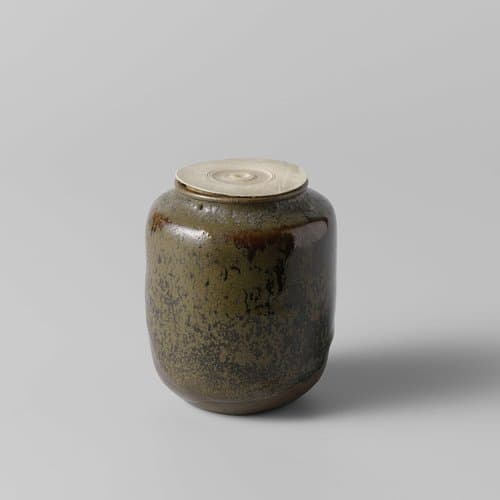
Tea caddy with a green brown glaze
c. 1700 - c. 1850
Medium
turning
Dimensions
4.3; 7.7; 6.5; 3.8; 0.6; 4.5; 7.5
Rights
Public Domain
About this artwork
theebus: hoogte 7,5 cm (zonder deksel)
Art Historical Context
This delicate tea caddy, standing at 7.7 cm tall, exemplifies everyday elegance from the 18th and early 19th centuries (c. 1700–1850). Crafted anonymously by a skilled artisan, its green-brown glaze lends a subtle, earthy sheen to the lathe-turned wooden form—known in Dutch as a *theebus*. The compact height, measured at 7.5 cm without its lid, made it ideal for storing precious tea leaves in prosperous households. Tea caddies like this surged in popularity across Europe as tea imports from Asia fueled a burgeoning luxury trade. In the Netherlands, where tea drinking became a social ritual, these vessels symbolized status and refinement, often locked to safeguard expensive contents. The broad date range reflects evolving tastes, from Rococo curves to simpler Regency lines. The medium of *turning*—shaping wood on a lathe—highlights masterful craftsmanship, producing smooth, symmetrical curves that maximized wood's natural beauty while applying a rare glaze for protection and luster. Though utilitarian, such objects bridge folk art and domestic design, offering a tangible glimpse into daily life during the Age of Enlightenment.