
Teabowl
ca. 1715–30
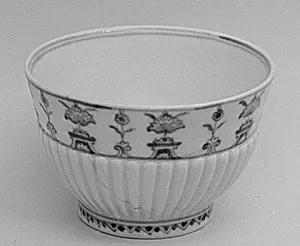
Medium
Soft-paste porcelain
Dimensions
Height: 2 1/4 in. (5.7 cm)
Classification
Ceramics-Porcelain
Culture
French, Saint-Cloud
Department
European Sculpture and Decorative Arts
Museum
Metropolitan Museum of Art, New York, NY
Credit
Gift of Alfred Duane Pell, 1902
Accession Number
02.6.69
Rights
Public Domain
Art Historical Context
This delicate teabowl, crafted the Saint-Cloud factory France around 1715–30, exemplifies the dawn of European porcelain production. Soft-paste porcelain the medium here, was a groundbreaking European innovation—a translucent, glassy alternative to coveted Chinese hard-paste porcelain. Saint-Cloud, one of France's earliest porcelain workshops established in the late 17th century, specialized in these pieces during the Regency period following Louis XIV's reign, luxury goods flourished amid growing fascination with exotic imports like tea. Measuring just 2¼ inches tall, the teabowl reflects the era's refined taste for intimate, functional ceramics. Saint-Cloud artisans mastered molding and glazing techniques, often producing white bodies with subtle colored grounds or molded reliefs, blending practicality with elegance. As tea drinking swept through European courts and homes—introduced via Dutch and British trade—this unassuming vessel became a status symbol, bridging Eastern traditions with French craftsmanship. Today, housed in the Metropolitan Museum of Art's European Sculpture and Decorative Arts department (gift of Alfred Duane Pell, 1902), it invites us to appreciate the ingenuity behind Europe's porcelain race, a pivotal chapter in decorative arts history.
About the Artist
Saint-Cloud factory · 1693–1766
The Saint-Cloud porcelain factory, situated on the Seine in the town of Saint-Cloud near Paris, revolutionized European ceramics as the first to manufacture soft-paste porcelain commercially, beginning in 1693. Originally established around 1664-1666 as a faience workshop, it shifted to porcelain under Pierre Chicaneau, a potter whose experiments yielded a frit-based paste with a warm yellowish or...