
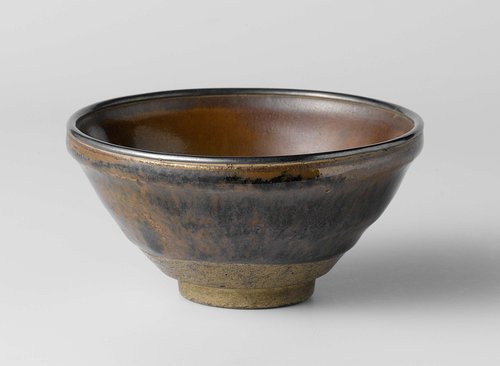
Teabowl with a 'hare's fur' glaze
ca. 1600 - ca. 1699
Medium
turning
Dimensions
10.8; 4; 5.4
Rights
Public Domain
About this artwork
Theekom (temmoku) van steengoed, gedeeltelijk bedekt met een bruin glazuur met goudbruine strepen (hazenvel) en zwarte vlekken. De onderste helft van de kom is ongeglazuurd. De rand is gevat in een metalen band. Oud label op de onderzijde met 'W675'. Seto.
Art Historical Context
This exquisite teabowl, crafted anonymously in Seto, Japan, around 1600–1699, exemplifies the artistry of Edo-period stoneware. Wheel-thrown to precise dimensions (5.4 high, 10.8 cm diameter), it features classic temmoku glaze—partially covering the upper half in rich brown tones streaked with golden-brown "hare's fur" markings and black spots. The lower portion remains unglazed, revealing the raw stoneware body, while a protective metal band encircles the rim, a practical enhancement for daily ritual use. An old label marked "W675" on the base hints at its longstanding museum provenance. The "hare's fur" effect, prized in Japanese tea ceremony (chanoyu) culture, arises from masterful kiln techniques where iron-rich glazes flux during high-temperature firing, creating dynamic, fur-like streaks that evoke nature's fleeting beauty. Seto kilns were renowned for such temmoku wares, imported from Chinese Song dynasty traditions but refined locally for wabi-sabi aesthetics—celebrating imperfection and transience. For tea enthusiasts, this bowl wasn't mere pottery but a sensory vessel, its tactile form and glaze inviting contemplation during matcha preparation. Its survival speaks to the enduring reverence for these humble yet profound objects in Zen-inspired rituals.