
Tegel
1500 - 1600
Medium
earthenware
Dimensions
2.5; 13.2; 13.2
Rights
Public Domain
About this artwork
hoogte 13,2 cm x breedte 13,2 cm x dikte 2,5 cm
Art Historical Context
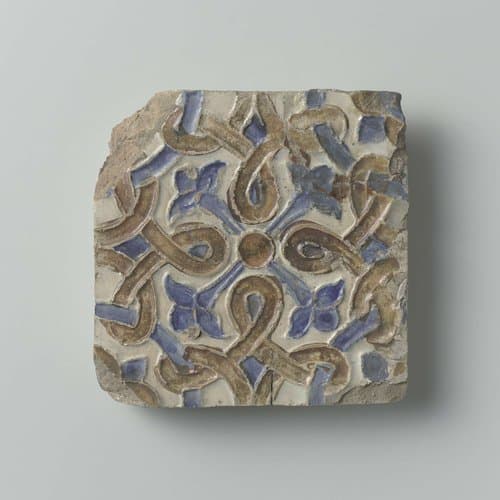
### Tegel (Tile) This anonymous earthenware *Tegel*, dating from 1500–1600, exemplifies the modest yet ubiquitous art of ceramic tiling during the Renaissance era in Northern Europe, particularly the Low Countries. Measuring a compact 13.2 cm high by 13.2 cm wide and 2.5 cm thick, its square format was ideal for creating expansive decorative panels on walls, fireplaces, or floors. Earthenware, fired at lower temperatures than porcelain, allowed for affordable production and vibrant glazing techniques that brought color and narrative scenes into everyday homes. Artistically, such tiles represented a democratic form of decoration, bridging elite frescoes and peasant crafts. Anonymous makers—often workshop artisans—relied on molds and stencils for efficiency, enabling mass replication of motifs like biblical stories, proverbs, or landscapes. This piece, surviving from a time of religious upheaval and trade boom, highlights how tiles preserved cultural memory in domestic spaces, resisting the era's transient fashions. Though details of its exact imagery remain elusive, the *Tegel*'s survival speaks to the durability of earthenware and its role in Dutch Golden Age precursors. Visitors, imagine it nestled among hundreds, transforming a simple room into a tiled tapestry of history!
About the Artist
anonymous
In the vast tapestry of art history, "Anonymous" stands not as a singular individual but as a collective designation for countless unidentified creators whose works have endured across millennia. These artists, spanning prehistoric cave painters to medieval illuminators and folk craftsmen, produced the foundational layers of human visual culture. Prior to the Renaissance, when individual fame emer...