
Tegel
1720 - 1760
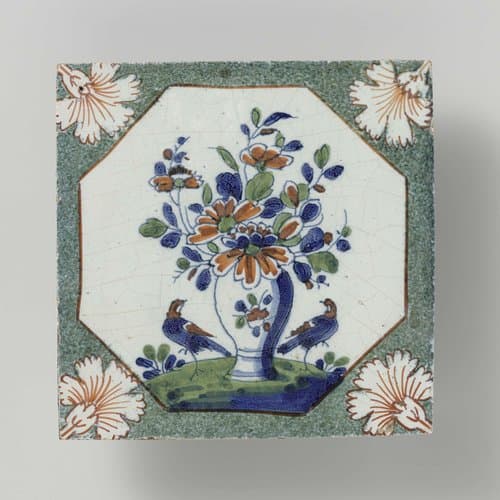
Medium
maiolica
Dimensions
0.8; 12.5; 12.5
Rights
Public Domain
About this artwork
height 12.5 cm x width 12.5 cm x thickness 0.8 cm
Art Historical Context
### Tegel: An 18th-Century Maiolica Tile This delicate square tile, titled *Tegel*—Dutch for "tile"—dates to the Rococo era between 1720 and 1760. Crafted anonymously in maiolica, a tin-glazed earthenware prized for its vibrant colors and glossy finish, it measures a modest 12.5 cm high by 12.5 wide and just 0.8 cm thick. Such compact dimensions made it ideal for assembling into larger decorative panels, fire surrounds, or wall friezes in Dutch and Flemish homes. Maiolica tiles like this one flourished in the Netherlands during the 18th century, blending Italian Renaissance techniques with local innovation. Artisans fired earthenware at low temperatures, then applied a tin-opacified glaze that allowed bold blues, whites, and polychrome motifs to shine without fading. These tiles weren't just functional; they transformed everyday interiors into artistic statements, often depicting biblical scenes, landscapes, or daily life to ward off evil or simply delight the eye. Though the artist's identity is lost to time—typical for workshop-produced pieces—*Tegel* embodies the democratic appeal of maiolica. It reflects a golden age of tile-making in Europe, where affordable beauty brought luxury to middle-class hearths, preserving cultural stories for generations. A charming glimpse into 18th-century domestic elegance! (198 words)
About the Artist
anonymous
In the vast tapestry of art history, "Anonymous" stands not as a singular individual but as a collective designation for countless unidentified creators whose works have endured across millennia. These artists, spanning prehistoric cave painters to medieval illuminators and folk craftsmen, produced the foundational layers of human visual culture. Prior to the Renaissance, when individual fame emer...