
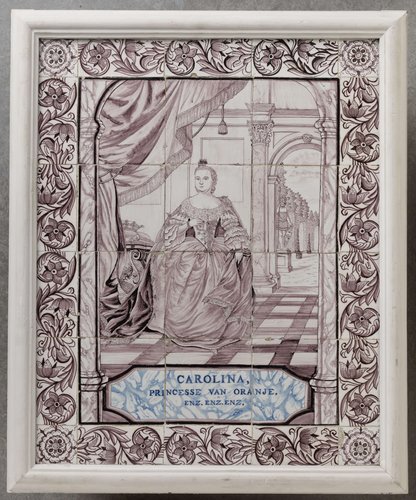
Tegeltableau met 30 tegels
1755 - 1765
Medium
maiolica
Dimensions
6; 59.5; 72.5
Rights
Public Domain
About this artwork
Bruikleen van het Koninklijk Oudheidkundig Genootschap
Art Historical Context
Step into the refined world of 18th-century Dutch domestic art with *Tegeltableau met 30 tegels*, a stunning tile panel crafted anonymously between 1755 and 1765. Composed of 30 maiolica tiles arranged into a cohesive tableau measuring 72.5 cm high by 59.5 cm wide, this piece exemplifies the era's love for durable, colorful wall decorations. Maiolica, a tin-glazed earthenware prized for its vibrant blues, whites, and polychrome glazes, was a hallmark of Dutch Delftware production, blending Italian Renaissance techniques with local innovation. These tile panels, or *tegeltableaus*, adorned the interiors of prosperous Dutch homes, particularly kitchens and fireplaces, where they protected walls from soot while serving as visual storytelling. Dating to the mid-1700s, this work reflects the lingering influence of the Dutch Golden Age, when ceramics workshops in cities like Delft churned out affordable luxury for the rising middle class. The anonymous craftsmanship underscores a collaborative workshop tradition, prioritizing pattern and narrative over individual fame. Today, on loan from the Koninklijk Oudheidkundig Genootschap (Royal Society of Antiquities), it offers a glimpse into everyday opulence—functional art that warmed both hearths and hearts. Imagine it gleaming in candlelight, a testament to Holland's ceramic mastery.
About the Artist
anonymous
In the vast tapestry of art history, "Anonymous" stands not as a singular individual but as a collective designation for countless unidentified creators whose works have endured across millennia. These artists, spanning prehistoric cave painters to medieval illuminators and folk craftsmen, produced the foundational layers of human visual culture. Prior to the Renaissance, when individual fame emer...