
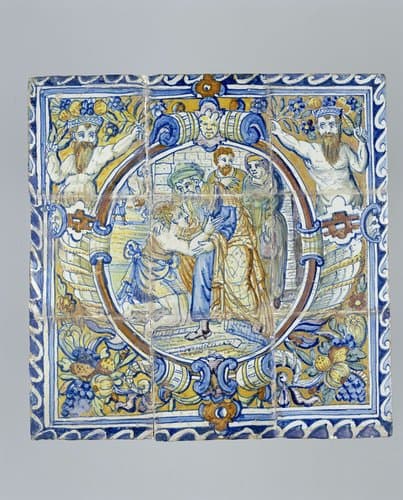
Tegeltableau met de terugkeer van de verloren zoon
Medium
maiolica
Dimensions
39.5; 39.7
Rights
Public Domain
About this artwork
hoogte 39,5 cm x breedte 39,7 cm
Art Historical Context
Nestled in the early 17th-century world of Northern European ceramics, *Tegeltableau met de terugkeer van de zoon* (Tile Tableau with the Return of Prodigal Son) Hans Bernaert Vierger dates to 1606. This compact square panel, measuring 39.5 cm high by 39.7 cm wide, captures a pivotal biblical parable from Luke 15, where a wayward son returns home to his forgiving father—a timeless tale of repentance, redemption, and familial love. Created during the Counter-Reformation era, such religious imagery served as moral instruction in households across the Low Countries. Crafted in maiolica, a tin-glazed earthenware prized for its luminous colors and durability, the work showcases Vierleger's skill in a medium that bridged Italian Renaissance techniques with Northern European tastes. The tin glaze created a smooth, reflective surface ideal for intricate painted scenes, fired to preserve vibrant blues, greens, and earthy tones against a white ground. Tile tableaux like this were popular for adorning fireplaces, walls, or chimneypieces, blending functionality with artistry in everyday domestic spaces. Vierleger, a specialist in this format, contributed to a flourishing tradition of Delft-style tilework emerging around this time, making sacred stories accessible and enduring. This piece invites visitors to reflect on its narrative warmth, preserved through centuries of craftsmanship.