
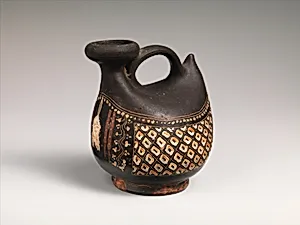
Terracotta askos (flask with spout and handle over top)
Unknown Artist
ca. 340–320 BCE
Medium
Terracotta
Dimensions
Height: 4 1/4 in. (10.8 cm)
Classification
Vases
Culture & Period
Greek, South Italian, Apulian, Gnathian · Classical
Department
Greek and Roman Art
Museum
Metropolitan Museum of Art, New York, NY
Credit
Purchase, The Concordia Foundation Gift and funds from various donors, 2015
Accession Number
2015.642
Rights
Public Domain
Art Historical Context
This delightful terracotta askos, around 340–320 BCE by unknown South Italian artist in the Apulian region, exemplifies the vibrant Gnathian pottery tradition of Magna Graecia—the Greek colonies in southern Italy. Standing just 4¼ inches (10.8 cm) tall, this flask features a distinctive arched handle spanning from body to beak-like spout, a practical design ideal for pouring oils, perfumes, or unguents in daily rituals or symposia. Gnathian ware, named after the ancient site of Gnathia (modern Egnazia), marked a Classical innovation in vase painting. Artisans applied white, yellow, and rose pigments over a glossy black background, creating vivid, improvisational motifs often depicting revelers, animals, or floral patterns—though this example's subtle form highlights the vessel's functional elegance. Such pieces bridged Greek red-figure techniques with local Italic flair, reflecting cultural fusion in the prosperous Apulian workshops. Housed in the Metropolitan Museum of Art's Greek and Roman Art Department since 2015, this askos offers a window into the refined tastes of South Italian elites, where everyday objects doubled as status symbols. Its survival underscores the enduring legacy of these terracotta masterpieces.