
Terracotta canopic urn
Unknown Artist
6th century BCE
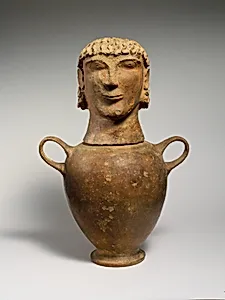
Medium
Terracotta
Dimensions
H. with cover 21 3/4 in. (55.2 cm); H. without cover 13 5/16 in. (33.8 cm)
Classification
Vases
Culture & Period
Etruscan, Chiusi or environs · Archaic
Department
Greek and Roman Art
Museum
Metropolitan Museum of Art, New York, NY
Credit
Purchase, 1896
Accession Number
96.9.50a, b
Rights
Public Domain
Tags
About this artwork
This vases from Etruscan, Chiusi or environs, Archaic, dating to 6th century BCE, provides valuable insight into the artistic practices and material culture of its era. Fashioned from terracotta, this work represents ancient traditions of ceramic production. Ceramic arts involved sophisticated understanding of clay preparation, forming techniques, firing temperatures, and surface treatments that varied across cultures and periods. These durable objects provide crucial archaeological and art hist...
Art Historical Context
This striking terracotta canopic, crafted by an unknown Etruscan artist in the Archaic period around the 6th century BCE, h from Chiusi or its environs in ancient Italy. Standing 21¾ inches tall with its cover (or 13⅜ inches without), it exemplifies the funerary vessels typical of Etruscan material culture, often featuring sculpted heads that evoke the deceased. Acquired by the Metropolitan Museum of Art in 1896, it now graces the Greek and Roman Art, offering a tangible link to a thriving pre-Roman civilization renowned for its sophisticated artistry. Fashioned from terracotta—a fired clay medium central to Etruscan production—this urn highlights advanced ceramic techniques, including clay preparation, wheel-throwing or molding, precise firing, and surface treatments for durability and aesthetic appeal. Such vases survived millennia, providing invaluable evidence of technological prowess, workshop practices, and regional styles. In Etruscan Chiusi, these urns served ritual purposes, reflecting beliefs in the afterlife and communal expressions of identity through portrait-like heads. As an anonymous work, it underscores the collective genius of Etruscan artisans, revealing patterns in visual culture, social structures, and religious priorities. Visitors, marvel at how this humble yet enduring object illuminates a vanished world, preserved for our wonder and study.