
Terracotta fragment from a pyxis lid (box)
Unknown Artist
late 6th century BCE
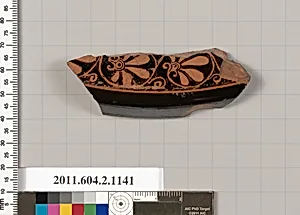
Medium
Terracotta
Classification
Vases
Culture & Period
Greek, Attic · Archaic
Department
Greek and Roman Art
Museum
Metropolitan Museum of Art, New York, NY
Credit
Gift of Dietrich von Bothmer, Distinguished Research Curator, Greek and Roman Art, 2011
Accession Number
2011.604.2.1141
Rights
Public Domain
Art Historical Context
This delicate terracotta fragment from the lid of a pyxis—a small lidded box used by ancient Greek women to store cosmetics jewelry, and trinkets—offers a glimpse into daily life in Archaic Attica around the late 6th BCE. Crafted in the vibrant pottery workshops of Athens, pyxides like this one were prized personal items, often elaborately painted with scenes from mythology, daily activities, or floral motifs. As a product of the Archaic period, it bridges the robust black-figure technique—where figures were outlined in black slip and details incised to reveal the red clay beneath—with the emerging red-figure style that would define Classical Greek art. The fragment's survival highlights the enduring allure of Attic vase-painting, renowned for its technical precision and narrative storytelling. Terracotta, fired clay abundant and versatile, allowed artisans to create waterproof vessels that doubled as canvases for cultural expression. Though incomplete, this piece underscores women's roles in ancient society and the artistic sophistication of pre-Periclean Athens. Generously gifted to the Metropolitan Museum of Art in 2011 by Dietrich von Bothmer, a leading scholar of Greek and Roman art, it enriches our understanding of everyday luxury in the ancient world. Visitors, imagine holding such a treasure— a testament to creativity across millennia!