
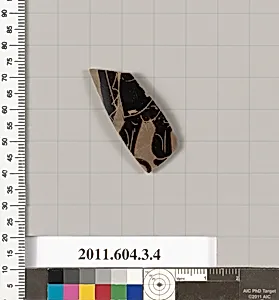
Terracotta fragment of a closed shape
Unknown Artist
late 6th/early 5th centuries BCE
Medium
Terracotta
Classification
Vases
Culture & Period
Greek, Attic · Archaic
Department
Greek and Roman Art
Museum
Metropolitan Museum of Art, New York, NY
Credit
Gift of Dietrich von Bothmer, Distinguished Research Curator, Greek and Roman Art, 2011
Accession Number
2011.604.3.4
Rights
Public Domain
Art Historical Context
This delicate terracotta fragment comes from a closed-shape vase, likely an everyday vessel such as an amphora or lekythos used for storing oil, wine, or perfumes in ancient Athens. Dating to the late 6th or early 5th century BCE, it hails from the Archaic period of Greek art, a time when Attic potters mastered wheel-throwing techniques and pioneered iconic painting styles like black-figure and the emerging red-figure. Though only a shard survives, it offers a tantalizing glimpse into the craftsmanship of anonymous artisans whose work adorned homes, tombs, and symposia across the Mediterranean. Attic vases from this era were not just functional but cultural ambassadors, exported widely and decorated with scenes from mythology, daily life, and athletic prowess. The terracotta medium—fired clay—allowed for durable, glossy finishes through slip decoration and incising, techniques that highlighted the potters' skill in capturing movement and narrative. This fragment exemplifies the transition from the rigid, silhouette-based black-figure style to the more naturalistic red-figure, bridging Archaic formality with the humanism of the Classical age. Generously gifted to the Metropolitan Museum of Art in 2011 by Dietrich von Bothmer, a legendary curator of Greek and Roman art, this piece invites us to ponder the lives of ancient Athenians through their humble yet exquisite pottery. Even in fragments, such artifacts whisper stories of innovation and everyday beauty.