
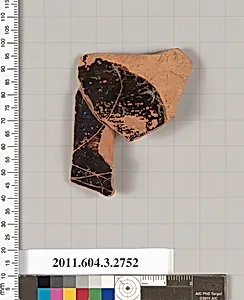
Terracotta fragment of a closed shape
Unknown Artist
first half of the 6th century BCE
Medium
Terracotta
Classification
Vases
Culture & Period
Greek, Attic · Archaic
Department
Greek and Roman Art
Museum
Metropolitan Museum of Art, New York, NY
Credit
Gift of Dietrich von Bothmer, Distinguished Research Curator, Greek and Roman Art, 2011
Accession Number
2011.604.3.2752
Rights
Public Domain
Art Historical Context
This delicate terracotta fragment hails from a closed-shape vase, likely a vessel for oils, perfumes, or unguents, crafted in Attic Greece during the first half of the 6th century. Produced in the Archaic period—a time of vibrant cultural and artistic flowering in ancient Athens—this piece exemplifies the everyday artistry of the era. Though only a fragment survives, it offers a tangible link to the workshops of Attica, where potters shaped clay into functional yet beautifully formed objects. Terracotta, or fired clay, was the medium of choice for Greek vases, prized for its durability and versatility. Attic potters were masters of this craft, producing wares that served both practical needs and ritual purposes, often exported across the Mediterranean. This fragment reflects the standardized yet refined aesthetics of Archaic vase-making, before the full bloom of iconic black-figure and red-figure techniques dominated later in the century. Generously gifted to the Metropolitan Museum of Art in 2011 by Dietrich von Bothmer, a legendary curator of Greek and Roman art, it underscores the ongoing fascination with these ancient shards. Each fragment like this whispers stories of ancient lives, trade, and devotion, inviting us to piece together the world of Archaic Athens.