
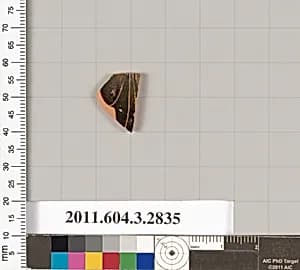
Terracotta fragment of a closed shape
Unknown Artist
510–500 BCE
Medium
Terracotta
Classification
Vases
Culture & Period
Greek, Attic · Archaic
Department
Greek and Roman Art
Museum
Metropolitan Museum of Art, New York, NY
Credit
Gift of Dietrich von Bothmer, Distinguished Research Curator, Greek and Roman Art, 2011
Accession Number
2011.604.3.2835
Rights
Public Domain
Art Historical Context
This delicate terracotta fragment from a closed-shape vase, dating to 510–500 BCE, offers a glimpse into the masterful pottery traditions of Archaic Attic Greece. Crafted Athens—the epicenter of ancient Greek ceramics—this piece belongs to the late Archaic period, a time potters and painters were perfecting techniques like black-figure decoration, where figures were incised through a glossy black slip to reveal the red clay beneath. Closed shapes, such as lekythoi or aryballoi, were practical vessels for oils, perfumes, or unguents, often used in daily rituals or as grave offerings. Though only a fragment survives, it exemplifies the technical precision and aesthetic refinement of Attic workshops. The terracotta medium, fired at high temperatures for durability, allowed for intricate designs that captured mythological scenes, athletes, or daily life, preserving snapshots of Greek culture for posterity. Donated to the Metropolitan Museum of Art in 2011 by the esteemed curator Dietrich von Bothmer, this artifact underscores the Archaic era's bridge to the Classical age, when vase painting evolved toward the innovative red-figure style. Visitors, imagine holding a piece of ancient Athens in your hands—its earthy warmth evoking symposia, sanctuaries, and seafaring voyages!