
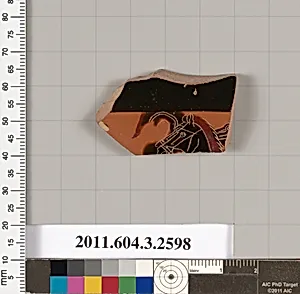
Terracotta fragment of a kylix: band-cup (drinking cup)
Unknown Artist
560–550 BCE
Medium
Terracotta
Classification
Vases
Culture & Period
Greek, Attic · Archaic
Department
Greek and Roman Art
Museum
Metropolitan Museum of Art, New York, NY
Credit
Gift of Dietrich von Bothmer, Distinguished Research Curator, Greek and Roman Art, 2011
Accession Number
2011.604.3.2598
Rights
Public Domain
Art Historical Context
This delicate terracotta fragment from a kylix—a shallow drinking cup known as a "band-cup"—offers a glimpse into Archaic Greek life around 560–550 BCE. Hailing from Attic workshops near Athens, these vessels were everyday essentials for symposia, the lively social gatherings where elite men shared wine, philosophy, and poetry. As a fragment, it preserves part of the narrow decorative band typical of band-cups, likely featuring black-figure painting: silhouetted figures incised with fine details and accented in purple or white clay slips. Crafted in terracotta, the medium's durability allowed these pots to survive millennia, revealing masterful techniques like wheel-throwing and firing in kilns that turned clay black through controlled smoke. Attic black-figure style, at its peak in the Archaic period, marked a shift toward narrative scenes from mythology or daily life, influencing later red-figure innovations. Though the full imagery is lost, such fragments highlight the anonymous potters' skill in blending utility with artistry. Generously gifted to the Metropolitan Museum of Art by Dietrich von Bothmer in 2011, this piece connects us to ancient Athens' vibrant culture, where pottery was both functional art and cultural export, traded across the Mediterranean. Imagine sipping wine from it amid revelry— a testament to enduring human conviviality.