
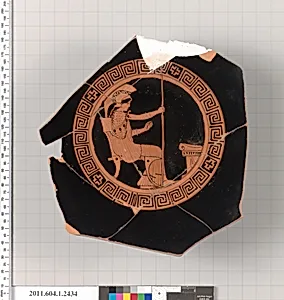
Terracotta fragment of a kylix (drinking cup)
Medium
Terracotta
Classification
Vases
Culture & Period
Greek, Attic · Classical
Department
Greek and Roman Art
Museum
Metropolitan Museum of Art, New York, NY
Credit
Gift of Dietrich von Bothmer, Distinguished Research Curator, Greek and Roman Art, 2011
Accession Number
2011.604.1.2434
Rights
Public Domain
Art Historical Context
This terracotta fragment comes from a kylix, a shallow, two-handled drinking cup central to social rituals in ancient Athens. Created between 470 and 460 BCE during the Classical period, it belongs to the vibrant tradition of Attic pottery, where Athenian workshops produced finely painted vessels that were exported across the Mediterranean. The kylix form was especially popular at symposia—male drinking gatherings where wine, conversation, and cultural exchange flowed freely—making even fragments like this valuable windows into daily life and artistic tastes of the time. The piece is attributed to the Painter of Munich 2676, an artist named after a related vase now in Munich’s collection. Working in the red-figure technique typical of the era, Attic painters like this one applied glossy slips and used the natural red color of the clay to render figures with greater naturalism and detail than earlier black-figure styles. Such works highlight the technical sophistication of Greek ceramic production, where painters balanced narrative scenes with elegant shapes suited to both use and display. As part of the Metropolitan Museum’s Greek and Roman Art collection, this fragment underscores the enduring appeal of Attic vases. Even small surviving pieces reveal the skill of anonymous craftsmen and the cultural importance of pottery in commemorating myths, athletics, and social customs that defined Classical Greece.