
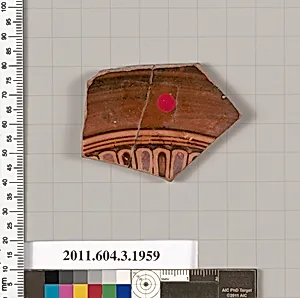
Terracotta fragment of a kylix (drinking cup)
Unknown Artist
mid-6th century BCE
Medium
Terracotta
Classification
Vases
Culture & Period
Greek, Attic · Archaic
Department
Greek and Roman Art
Museum
Metropolitan Museum of Art, New York, NY
Credit
Gift of Dietrich von Bothmer, Distinguished Research Curator, Greek and Roman Art, 2011
Accession Number
2011.604.3.1959
Rights
Public Domain
Art Historical Context
This terracotta fragment from a kylix, a shallow drinking cup with horizontal handles, hails from Attic Greece in the mid-6th BCE, during the vibrant Archaic period. Crafted in the heart of ancient Athens, these vessels were everyday luxuries, essential for symposia—ively social gatherings where elite men reclined, drank wine, and debated philosophy or poetry. Though only a fragment survives, it evokes the refined pottery workshops of Attica, renowned for their technical mastery and widespread export across the Mediterranean. Attic vases like this one represent a pinnacle of Archaic Greek art, where terracotta was fired and often decorated with black-figure technique—incised figures filled with glossy black slip against a red clay ground. This method allowed intricate scenes of mythology, daily life, or athletics to come alive. The kylix's wide mouth and low profile made it ideal for sipping diluted wine, symbolizing moderation and communal ritual in Greek culture. Generously gifted to the Metropolitan Museum of Art in 2011 by Dietrich von Bothmer, a legendary curator of Greek and Roman art, this piece offers a tangible link to Athens' golden age of innovation, bridging the gap between Geometric austerity and the Classical humanism to come. Imagine toasting with ancients under flickering lamplight!