
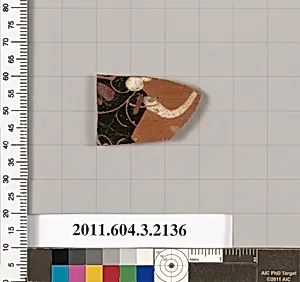
Terracotta fragment of a kylix (drinking cup)
Unknown Artist
late 6th century BCE
Medium
Terracotta
Classification
Vases
Culture & Period
Greek, Attic · Archaic
Department
Greek and Roman Art
Museum
Metropolitan Museum of Art, New York, NY
Credit
Gift of Dietrich von Bothmer, Distinguished Research Curator, Greek and Roman Art, 2011
Accession Number
2011.604.3.2136
Rights
Public Domain
Art Historical Context
This delicate terracotta fragment from a kylix, a shallow drinking cup popular in ancient Greek symposia, hails from Attic Greece in the late 6th BCE. During the Archaic period, vessels were everyday luxuries, used for mixing and sipping wine at social gatherings where philosophy, poetry, and politics flowed freely. Produced in Athens, the heart of Greek pottery innovation, this piece exemplifies the craftsmanship of anonymous workshop artisans who shaped red-firing clay into functional art. Terracotta vases like this kylix fragment were typically decorated using the black-figure technique—incising figures into a glossy black slip before firing—or its emerging red-figure counterpart, allowing intricate details to emerge in the natural clay color. Though only a fragment survives, it offers a glimpse into Archaic aesthetics: bold forms, mythological motifs, and a celebration of the human form that bridged the rigid Geometric style and the dynamic Classical era. These cups weren't just practical; they were status symbols, often exported across the Mediterranean, spreading Greek culture. A generous gift to the Metropolitan Museum of Art in 2011 from Dietrich von Bothmer, this shard invites us to ponder the voices of antiquity—lost revelers toasting to life's fleeting joys. (198 words)