
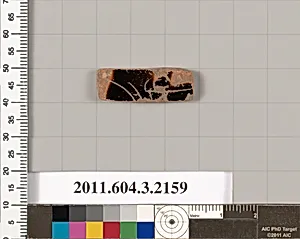
Terracotta fragment of a kylix (drinking cup)
Unknown Artist
late 6th/early 5th centuries BCE
Medium
Terracotta
Classification
Vases
Culture & Period
Greek, Attic · Archaic
Department
Greek and Roman Art
Museum
Metropolitan Museum of Art, New York, NY
Credit
Gift of Dietrich von Bothmer, Distinguished Research Curator, Greek and Roman Art, 2011
Accession Number
2011.604.3.2159
Rights
Public Domain
Art Historical Context
This terracotta fragment from a kylix, a shallow drinking cup popular in ancient Greece, offers a glimpse into the vibrant of Attic pottery from the late Archaic period ( 6th to early 5th century). Produced in Athens, the heart of Greek ceramic innovation, kylikes like this were essential for symposia—lively social gatherings where elite men reclined, drank wine, and engaged in intellectual discourse. Though only a piece survives, it exemplifies the craftsmanship of anonymous Attic workshops, where potters and painters collaborated to create functional yet beautifully decorated vessels. Terracotta, fired clay, was the medium of choice for these vases, allowing for intricate black-figure or emerging red-figure techniques that highlighted mythological scenes, athletes, or daily life. This fragment, gifted to the Metropolitan Museum of Art in 2011 by renowned scholar Dietrich von Bothmer, underscores the period's artistic transition toward the Classical era, when Athenian pottery dominated Mediterranean trade and influenced cultures from Italy to the Black Sea. Even as a fragment, it holds immense value, revealing firing methods, gloss techniques, and the enduring cultural role of such cups in rituals and revelry. Visitors can appreciate how these everyday objects bridged art and life in ancient Athens, preserving stories across millennia.