
Terracotta fragment of a kylix (drinking cup)
Unknown Artist
mid-5th century BCE
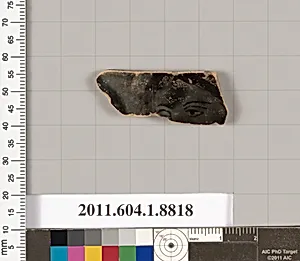
Medium
Terracotta
Classification
Vases
Culture & Period
Greek, Attic · Archaic
Department
Greek and Roman Art
Museum
Metropolitan Museum of Art, New York, NY
Credit
Gift of Dietrich von Bothmer, Distinguished Research Curator, Greek and Roman Art, 2011
Accession Number
2011.604.1.8818
Rights
Public Domain
Art Historical Context
This delicate terracotta fragment from a kylix, a shallow drinking cup popular in ancient Greek symposia, hails from Attic Greece in the mid-5th BCE. Produced during the Archaic period, such vessels were everyday essentials turned artistic canvases, often featuring painted scenes of mythology, daily life, or revelry. Though only a piece survives, it evokes the refined craftsmanship of Athenian potters, whose workshops dominated the Mediterranean pottery trade. Attic terracotta vases like this one highlight the evolution of Greek ceramic techniques, from black-figure to emerging red-figure styles that allowed for greater detail and naturalism. Used in social rituals, kylikes fostered communal bonding, their wide mouths ideal for sipping wine while reclining. This fragment, classified among the Metropolitan Museum of Art's Greek and Roman vases, underscores the period's cultural vibrancy—when Athens was a hub of philosophy, drama, and democracy. Generously gifted in 2011 by Dietrich von Bothmer, the Met's esteemed curator of Greek and Roman Art, it invites us to ponder the lives of those who once held its complete form, bridging millennia with a touch of ancient elegance.